
How to Follow Up a Quote Without Being Annoying
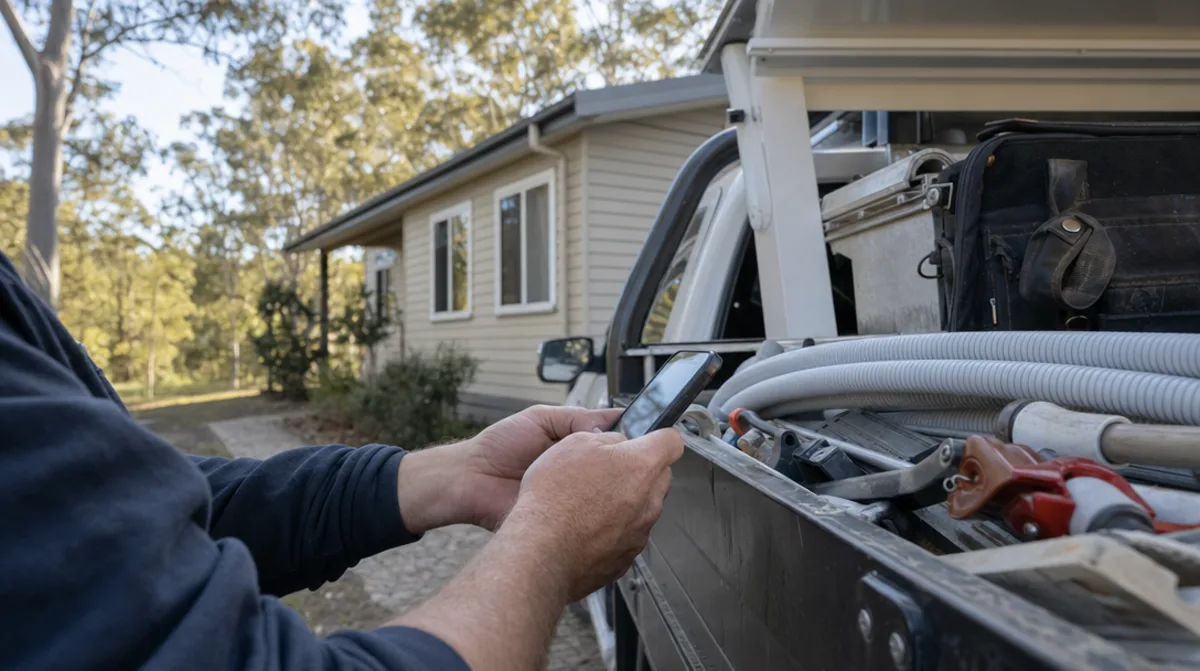
A quote you were confident about goes out on Monday, and by Friday you've heard nothing — so every option feels wrong: chase it and look desperate, or leave it and lose a job you've already spent an hour pricing. Being annoying has almost nothing to do with how often you make contact. It comes down to whether each message hands the customer something useful, or just asks them to justify themselves to you. Get the timing, the wording and the exit right, and you can make contact four or five times and still be the tradie they ring.
Silence is almost never a no
Quotes go quiet for boring reasons. They're waiting on a second or third price. One partner hasn't seen it yet. The money isn't there until the next pay cycle. The strata committee meets in three weeks, or the insurer hasn't come back. Your PDF is sitting in a junk folder. Sometimes they don't understand what's included and are too embarrassed to ask. None of that is a decision — it's an unfinished task sitting under school pick-ups, work and everything else. You're not asking someone to explain themselves; you're helping them tick something off. Write every follow-up as if the customer still wants the job done and hasn't had the headspace to sort it, because usually that's exactly what's happened.
Speed first: the follow-up you never have to send
The best follow-up is the one you never need. Price it and send it while the conversation is still warm — same day for small jobs, within 48 hours for anything you need to work up. Until a second price lands, yours is the only number they have to think about. Then set up the next step yourself in the sending message: "Quote's just gone through to your email — have a read and give me a bell if anything's unclear. If I haven't heard back by Thursday I'll flick you a quick text to make sure it landed." That sentence sets a soft deadline and turns Thursday's message into keeping your word. It's also the argument for voice-to-quote: with Taskr you can talk the job through on the drive back and have it priced and sent before your next call.
The cadence: five contacts over a month, then stop
A workable rhythm for domestic and small commercial work looks like this. Day 0: send the quote plus a short message saying what happens next. Day 3: confirm it arrived and offer to explain anything. Day 8 to 10: bring new information, usually your booking availability. Day 14 to 21: a scheduling or price-validity nudge. Around day 30: the closing message that lets them off the hook. Three rules stop it feeling like pressure. One question per message, never a stacked interrogation. Every contact carries something new, so you never send "just following up". And you stop at five. For jobs over roughly $10,000, swap one text for a phone call — you can hear hesitation on a call and answer it on the spot, which a message can't do.
Scripts for the first two follow-ups
Day 3, by text: "Hi Sarah, Dave here from Fairline Electrical — just making sure the switchboard quote actually landed, they sometimes end up in junk. No rush on deciding, but happy to talk through any of the line items if something doesn't make sense." Day 8 to 10, with a reason to reply: "Hi Sarah, I'm locking in my September bookings this week. Want me to hold a couple of days for the switchboard job? Nothing to pay to hold it and I can release it if you decide to go another way — just easier than squeezing you in later." Neither message asks "have you made a decision yet?" That question puts them on the spot and gives nothing back, so replying gets postponed. Both of these hand over something and can be answered in four words.
The message that actually gets a reply
Around three to four weeks, send the one that gives them permission to say no: "Hi Sarah, I'm tidying up my open quotes for the month. Are you right for me to close this one off, or is it still on the cards? Either answer is completely fine — I just don't want to keep pestering you." By email, use the subject line "Closing off your switchboard quote?" It works because you've made "no" easier than more silence, and the silence was usually avoidance of an awkward conversation. You'll get one of three replies: a clean no, which frees up your pipeline; a "sorry, been flat out, still keen", which puts the job back on; or a real objection you can finally do something about. All three beat wondering.
When they say it's more than they expected
Don't drop your price to save the job. Take $800 off while removing nothing and you've told the customer your first number was invented — and they'll expect the same on every future job and variation. Change the scope instead. "Fair enough — two ways to bring that number down. We can do the meter box and the kitchen circuits now and leave the outdoor lighting until next financial year, or I can price a cheaper fitting that saves around $600 but carries a shorter warranty. Which suits you better?" Then ask what they're comparing it to. Rival quotes often exclude make-good, rubbish removal, certification — or GST, if the other bloke isn't registered — so you may not be pricing the same job. Explaining that calmly keeps your margin intact and lets them compare like with like.
When to walk away, properly
After the closing message, stop. Someone who has ignored four polite, useful messages and an explicit invitation to say no is telling you something, and a sixth message only makes them avoid you at Bunnings. Move them to a "not now" list with the reason if you know it, and get on with the jobs in front of you. That list is still worth money later. A seasonal touch two or three times a year is welcome where a chase is not: hot water and heating before winter, gutters and roof checks before storm season, switchboards and air-con before the first 38-degree week. "Hi Sarah, we're heading into storm season — the gutter work we quoted in March is still on file if you want me to refresh the price." That's a service, not a chase.
Make the yes easy in the first place
Plenty of quotes aren't rejected — they're just harder to accept than to ignore. Put a validity date on it, usually 30 days, so you aren't bound to March pricing in September. Say plainly whether it's a fixed-price quote or an estimate, because once a customer accepts a quote it's a firm offer you're held to. If you're registered for GST — compulsory once turnover hits $75,000 — show consumers one GST-inclusive total rather than making them do sums, and put your ABN and licence number on the document. List what's excluded as clearly as what's included: excavation, make-good, painting, scaffolding, permits. Add a couple of site photos so they remember which job this is, offer extras as separate tick-able items, and make accepting a single tap rather than "print, sign and post back".
Know your deposit and contract rules before you ask
Nothing kills momentum like asking for a deposit you're not allowed to take. Residential building work is regulated state by state and the caps differ: NSW limits the deposit to 10% of the contract price, while Victoria and Queensland drop to 5% once the price passes $20,000. Most states also require a written contract above a few thousand dollars, and several give consumers a short cooling-off period after signing. Check current thresholds with your state regulator — NSW Fair Trading, Consumer Affairs Victoria, the QBCC — because they change. Stating the deposit, payment terms and any cooling-off rights on the quote removes the last bit of hesitation, and beats discovering the rule mid-argument.
Don't run your pipeline on memory
The quotes that quietly disappear are usually the ones you forgot to follow up, not the ones you lost. Record three things against every quote: the date you sent it, the date of the next contact, and whether it's live, won, lost or parked. A whiteboard works. A spreadsheet works. What doesn't work is holding a dozen open quotes in your head while you're on the tools. Taskr keeps quotes, jobs, invoices and payments in one place, and you can ask its assistant which quotes are still unanswered instead of scrolling your sent items — and it chases overdue invoices automatically. Quotes still need a human; at least you'll know exactly which ones and when.
Frequently asked questions
- How many times should I follow up a quote?
- Four or five contacts over about a month is plenty for most trade quotes: a confirmation when you send it, a check that it arrived around day three, an availability nudge in week two, and a closing message at three to four weeks. If there's still no reply after you've asked whether to close it off, stop chasing and move them to a seasonal contact list.
- How long should I wait before following up a quote?
- Wait two to three days before your first follow-up. Any sooner reads as pressure; much later and your quote has gone cold against competing prices. Space the rest out: roughly day eight to ten, then day fourteen to twenty-one, then a closing message around the one-month mark. Tell the customer your timing when you send the quote so no follow-up feels like an ambush.
- What do I say when a customer says my quote is too expensive?
- Don't cut the price without cutting scope, or you've admitted your first number was padded. Offer alternatives instead: stage the work across two visits or two financial years, or swap to a cheaper fitting and explain the trade-off in warranty and lifespan. Also ask what they're comparing it to — rival quotes often leave out GST, make-good, rubbish removal, scaffolding or certification.
- Should I follow up a quote by text, email or phone call?
- Text works best for residential customers because it gets read and can be answered in a few words. Email suits strata, builders and commercial clients who need a paper trail. For jobs over roughly $10,000, make at least one follow-up a phone call — you can hear hesitation and answer the real objection on the spot, which messages don't allow.
- How long should a quote be valid for in Australia?
- Thirty days is the common default, and the expiry date should be printed on the quote so you aren't held to old material or freight pricing. Make clear whether you're giving a fixed-price quote or an estimate: once a customer accepts a quote, it's a firm offer you're bound to. If you're registered for GST, show consumers a single GST-inclusive total.
Put this into practice with Taskr
Voice & photo quoting, live job costing, receipt scanning and Xero sync — built for Australian trade & service businesses. Every plan starts with a 14-day free trial.
Start 14-day free trial